Your own chain, secured from day one
Teams build application chains with the TOG SDK. The Hub validates every block they produce, so a new chain does not have to recruit its own validators, and chains talk to each other without bridges.
The Only Grid is a Layer 0 network. Application chains share its security, and a grid of independent machines runs and stores their workloads. Every result is checked by the network, not taken on trust.
Most compute networks fold consensus, applications and hardware into one chain. TOG keeps them apart, so each can do its job well.
Teams build application chains with the TOG SDK. The Hub validates every block they produce, so a new chain does not have to recruit its own validators, and chains talk to each other without bridges.
A single chain with fast, final blocks. It orders and finalizes every connected chain, keeps the registry of machines and runs one shared market for compute and storage.
Bonded CPU and GPU hosts run container jobs, and storage providers hold the data those jobs need. They are paid for work, not for taking part in consensus.
Containers on CPUs and GPUs: AI training and inference, rendering, scientific and batch jobs. Long jobs run in steps and survive restarts.
Running on devnetDatasets, images and checkpoints held by bonded storage providers, with regular checks that the data is still there.
Running on devnetApplication chains built with the TOG SDK that can order compute and storage straight from their own logic.
SDK and example chain runningSharing Wi-Fi with guests who pay per gigabyte, planned as a pilot in one EU city.
Planned after mainnetA job never slows the chain down. Blocks carry only its milestones, so it can run for days while blocks keep coming.
A team or an AppChain sends a container job and sets its budget, held in escrow.
The network assigns the job to a bonded machine. Providers do not pick their own jobs.
The machine runs the container in a sandbox, in steps with checkpoints.
Other machines independently re-check the work. A provider that cheats loses its bond.
The provider is paid for completed, checked work, and the result goes back to the customer.
You do not have to trust the machine that ran your job. The network checks the result.
A single machine with one GPU can sell compute without running a validator.
Datasets and checkpoints live with storage providers. Only what is needed to check them goes on chain.
AI startups, render studios and research groups that pay for CPU, GPU or storage every month.
Owners of GPU and CPU servers, small data centers and homelabs.
Rust and Wasm teams who want a chain of their own with compute built in.
Each phase starts when the one before it is done. These are our targets for the next nine months.
Specifications for the whole network and a Rust reference implementation, tested on a local multi-node network.
Four machines run by the team, CPU jobs only. Transfers, jobs, AppChain jobs, era changes, restarts and nodes joining from a snapshot.
Key ceremony for validators, sandboxing tested on real hosts, public entry points (bootnodes, RPC, faucet, basic explorer), a guide for operators and bug-bounty rules.
Outside operators join with their own machines, and the first users run jobs with free test credits.
Two firms: one for cryptography, one for the node software.
Findings fixed and re-verified, and a new version deployed on the public testnet.
The code that launches is frozen. After this, only fixes.
30 days without a safety bug on the frozen code. Mainnet prices set from what the testnet measured. Legal review, final genesis and key ceremony.
Network launch and the first AppChains, followed by TOG Cloud Console for teams that pay in dollars.
Dates are targets, not commitments. If an audit finds a design problem, mainnet moves later.
As of 23 October 2026. Lines of code across all TOG projects, without blank lines and comments; 95% of it is Rust. The closed testnet runs validators, compute workers, storage nodes and an AppChain with its collator.
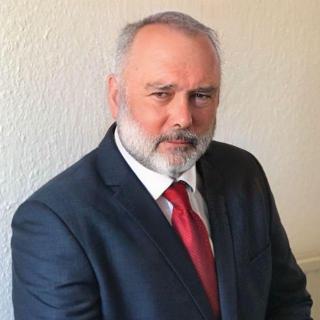
Founder & System Architect
github.com/vahidzekic
Chief Operating Officer (COO)
LinkedInOperators will be able to join with their own machines and teams will run real jobs on free test credits.